

#13: Get Inspired at Saturday's Black Zine Fair
On Black Self-publishers & Zine-making

Leading up to the Black Zine Fair this Saturday, May 9, 2026, in Brooklyn, New York, we’re highlighting some favorite Black self-publishers throughout history.
Black Zine Fair
The Black Zine Fair (BZF) is a celebration of all things Black and independent publishing in New York City! We invite Black exhibitors and educators to gather, trade or sell zines, and exchange knowledge surrounding zine-making, publishing, and do-it-yourself culture. This event is free and open to anyone who wants to support the work of Black zine makers!
May 9, 2026, from 11AM - 6 PM
Brooklyn, New York
RSVP at blackzinefair.org
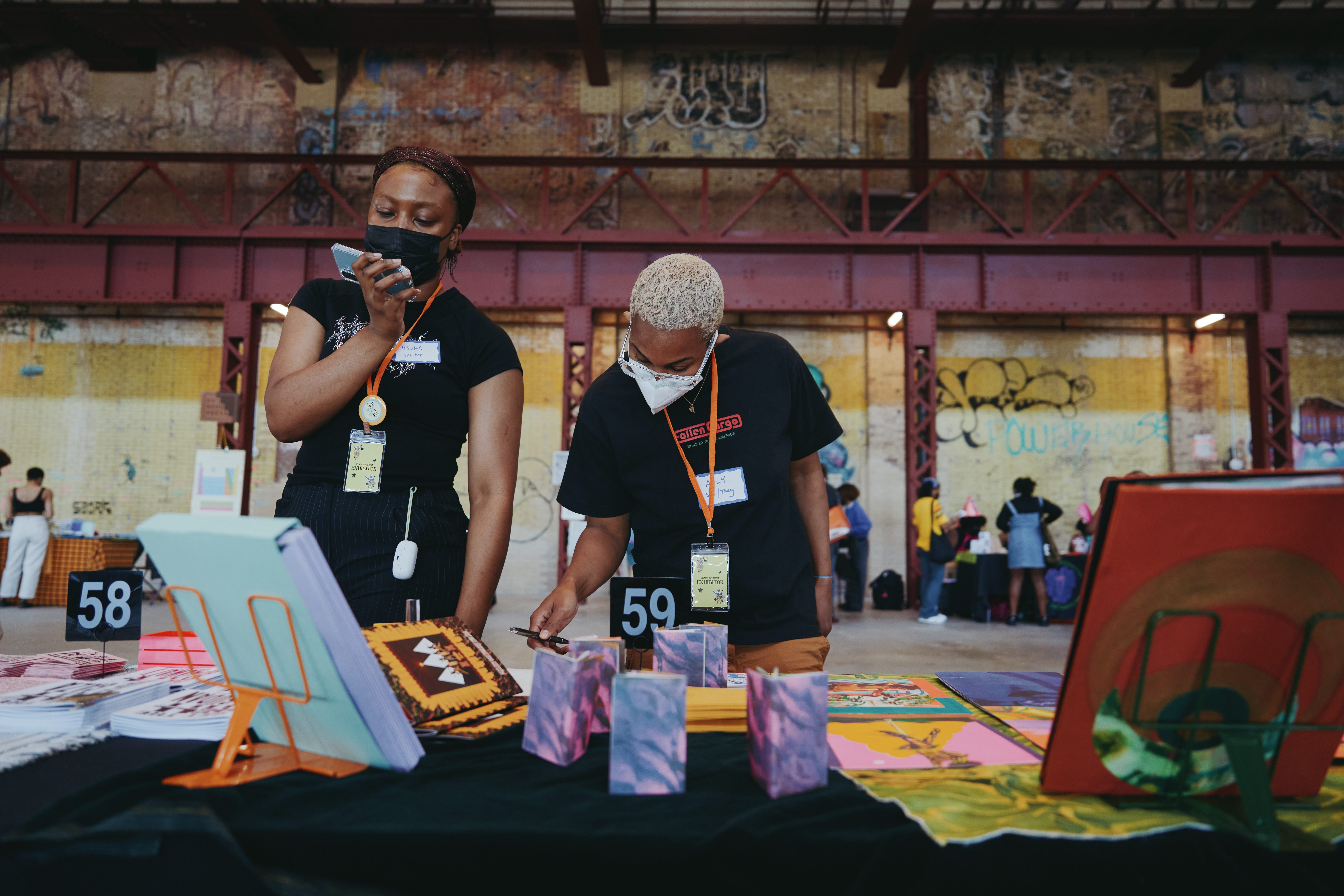
2025 BZF, courtesy of Sojourners for Jusrice, Photographer Elliott Jerome Brown Jr.
Fire!!
2026 marks the 100-year anniversary of the first and only issue of FIRE!! A Quarterly Devoted to the Younger Negro Artists. The “little magazine” was published in November 1926 by editor Wallace Thurman and an editorial board that included Langston Hughes, Richard Bruce Nugent, Zora Neale Hurston, Gwendolyn Bennett, John Davis, and Aaron Douglas. In his 1982 foreword, Thomas Wirth writes that, “Financed by its creators, a small circle of their friends, and a printer who wasn’t paid, FIRE!! was free from the restraints imposed by the need to please patrons and publishers (who tended to be wealthy and white).” Ultimately, the radical publication did not prove to be financially viable, and operations ceased abruptly when their headquarters burned down after the publication of their first issue.
But it was FIRE!!
Douglas, describing why FIRE!! was different than other publications at the time, remarked that, “We are all under thirty. We have no get-rich-quick complexes. We espouse no new theories of racial advancement, socially economically or politically. We have no axes to grind…We are primarily and intensely devoted to art.” FIRE!!’s depiction of Black youth culture was predictably met with mixed reviews, but looking at the masthead and table of contents in retrospect, they read like a who’s who of major names in African American literature and art. As Wirth writes, “It was a special time and a special place which made the collaboration possible. Hence FIRE!! is, in a real sense, the Harlem Renaissance incarnate.”
Thanks to the POC Zine Project, you can read FIRE!! here.
Self-Publishing
The tradition of self-publishing is the tradition of publishing, and where you find mainstream publications, there is sure to follow self-publishers that history aims to exclude. 1ME co-founder Mariame Kaba entered the long history of Black women self-publishers with her press, Sojourners for Justice, dedicated to Black feminist, and abolitionist philosophies and visions, as well as the organizer of the Black Zine Fair.
Spotlight: Sojourners for Justice Press
Success in self-publishing can open the way to traditional publishing deals. Some Black women, however, self-publish by choice. Educator and organizer Mariame Kaba has published numerous books with independent presses. But she has also created her own Sojourners for Justice Press, co-directed with Neta Bomani. It publishes zines and pamphlets about Black radical activism, prison/policing abolition, and Black feminism by Kaba and others. In their April article, “The City in Our Hands,” Neta and Mariame explain that, “Our name is a nod to the self-publishing and activist legacy that Sojourner Truth blazed for us. It also recalls the Sojourners for Truth and Justice (STJ), a short-lived but influential organization of Black women socialists and communists in the early 1950s who embodied Black feminist thought through manifesto, collective action, and public speech. Several of the founding members of STJ, including Louise Thompson Patterson, Eslanda Robeson, Claudia Jones, lived, worked, and published in New York.
A sojourner is someone who finds their way by passing from place to place temporarily rather than settling permanently. The term acknowledges the ephemerality of publishing: pamphlets lost, newspapers faded by the sun, zines unbound after years of handling. Ideas sojourning, surging, circulating, building power as they move.”
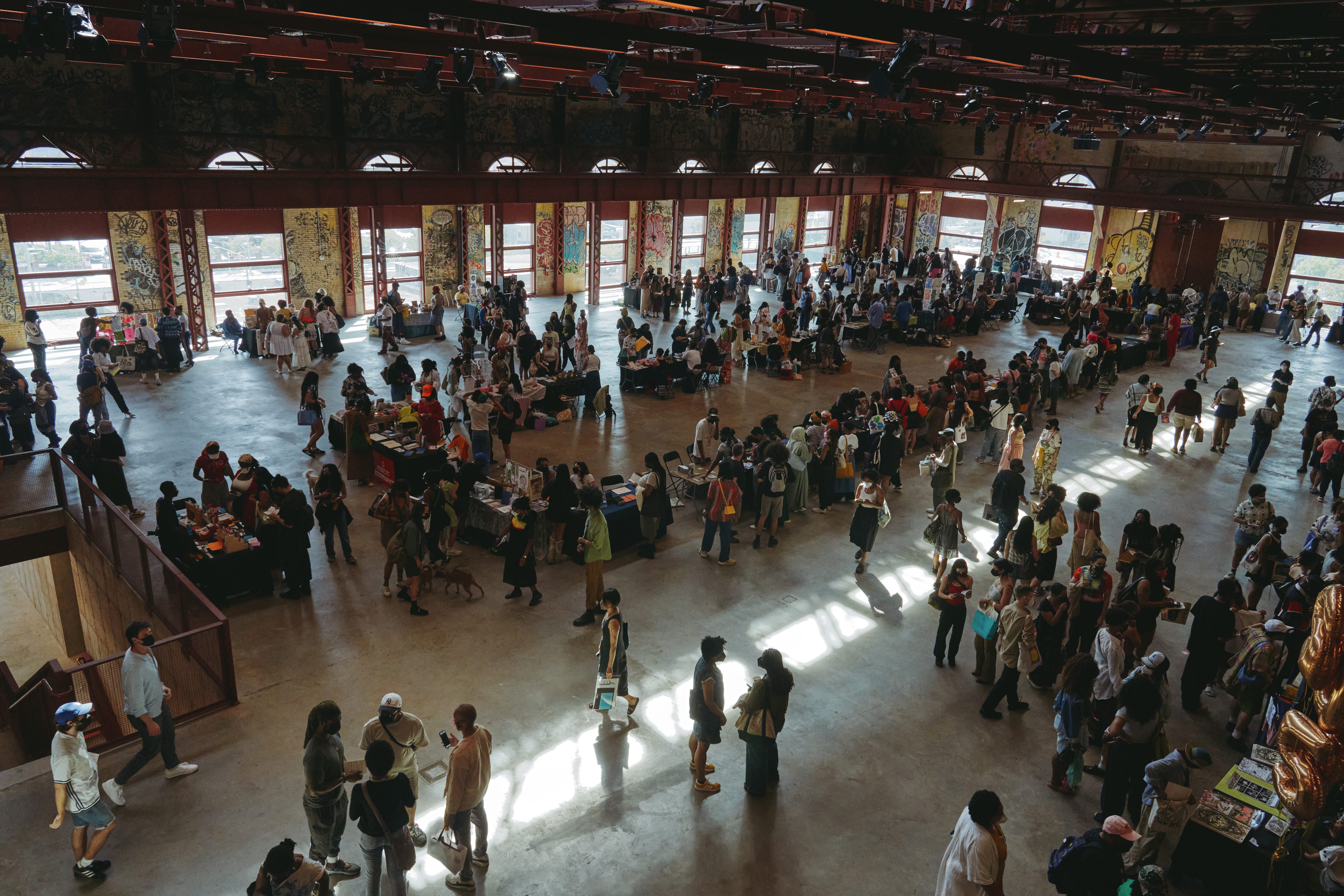
2025 BZF, courtesy of Sojourners for Justice, Photographer Elliott Jerome Brown Jr.
Presses like Mariame’s are bright stars in the constellation of experiments that we feature in our database, and they also represent an important and different way of sharing information about experiments — a way that is not dependent on foundation or corporate funding or relegated solely to the intrinsically ephemeral internet. Technofascism looms large in our work documenting, sharing, and archiving experiments, and we’re reminded of the importance of creating and maintaining mechanisms to share information in ways that we can own and control ourselves. (It’s no coincidence that many zinesters started out as pen-pals.) Self-publishing, and self-publishing low-cost zines, continues to be our favorite way forward.
Like the example FIRE!!, we’re also very cognizant of the stories that get left behind, buried, or deemed unpublishable — like the stories of many abolitionists that we feature: people, projects, and collectives experimenting at the margins. Spaces like the Black Zine Fair are critical to the survival and dissemination of stories and strategies that people might otherwise miss out on.
You can subscribe to Sojourners’ mailing list here. You can even send a zine from their collection to an incarcerated reader here.
Spotlight: Kitchen Table: Women of Color Press
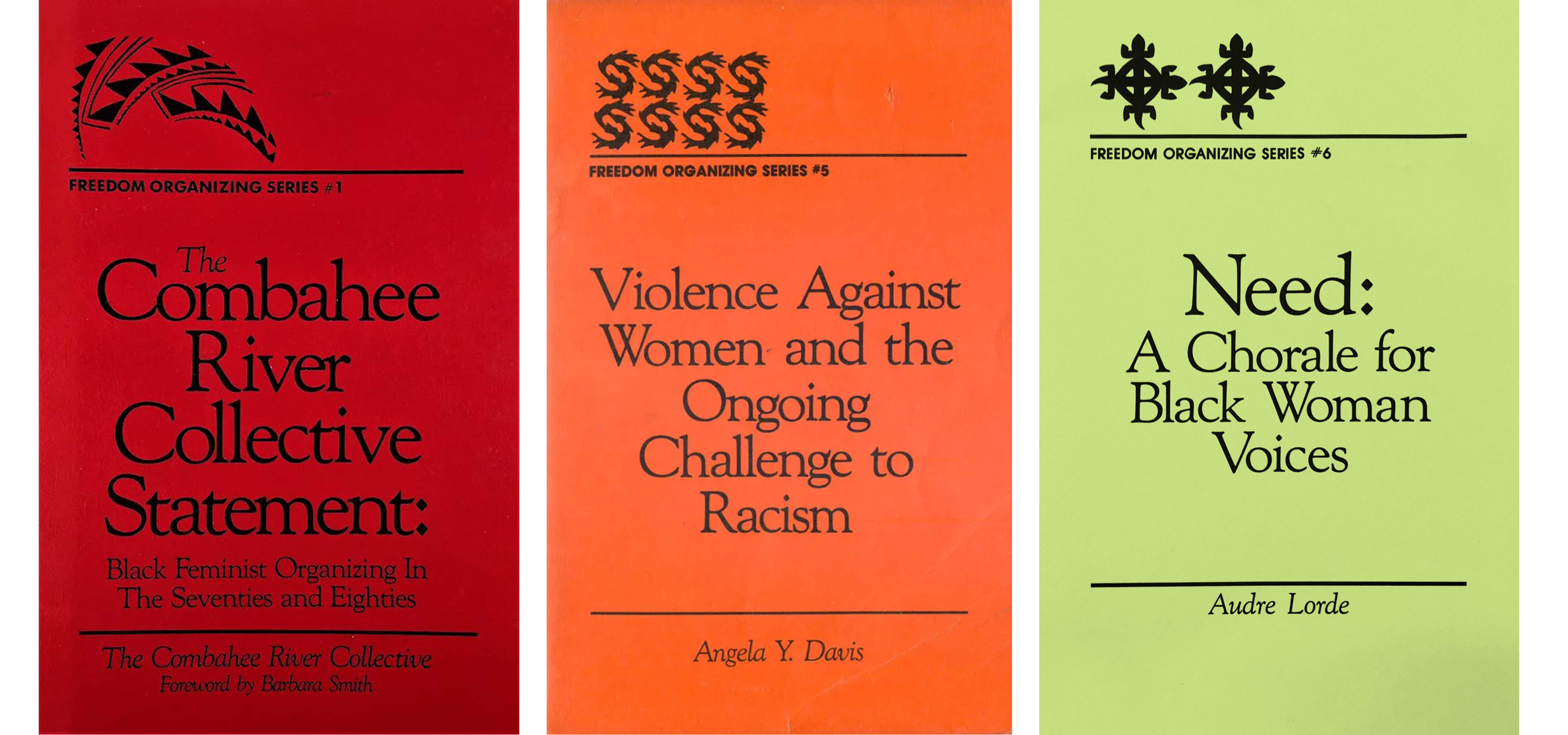
Professor, writer, and activist Barbara Smith begins her 1989 article, “A Press of Our Own,” saying, “If anyone had asked in 1980 whether books by women of color could sell or whether a press that published only work by and about women of color could survive, the logical answer would have been, ‘no,’ especially if the person who answered the question was part of the commercial publishing establishment. Even less than a decade ago, writing by American Indian, African American, Latina, and Asian American women was barely noticed by the literary and academic establishments, let alone by the general reading public.” Alongside poet Audre Lorde, Smith founded Kitchen Table, a Black lesbian feminist press dedicated to books by women of color, “with good (intentioned) hearts and strong minds.” In addition to the list of influential books published in the press’s 12-year run, Kitchen Table published The Freedom Organizing Pamphlet Series. The collection includes seminal works like, “The Combahee River Collective Statement: Black Feminist Organizing in the Seventies and Eighties,” “Violence Against Women and the Ongoing Challenge to Racism,” by Angela Davis, and “Need: A Chorale for Black Women Voices,” by Audre Lorde.
Zines (and pamphlets) are sold, traded, and given out for free in many independent bookstores, libraries, and local zine festivals across the world: It’s easy to experiment with self-publishing wherever you are! You can explore zine distros for people of color, like Brown Recluse Zine Distro, or shops for projects like A.B.O. Comix that distribute and fundraise for zinesters who are currently incarcerated; zine archives, like the one at the Barnard Zine Library; and zine mail clubs, like Booklyn’s Zine Club.
Zine-making 101
Have you always wanted to make a zine but don’t know where to start? Library guides offer a lot of great resources on zine-making — like this overview from CUNY’s Mina Rees Library, or this collection of templates from Princeton University. Find a library near you and check to see if they have zine resources.
Booklyn, an artist-run, non-profit is another excellent source of materials (and workshops if you’re local to NYC). Their BPL Zine Box has an amazing handbook, which covers zine history, zine-making basics, and program ideas. The Booklyn Education Manual, “aims to provide the basic background, skills and techniques for learners of all ages and experience levels to express their ideas and manufacture their own media while creating a space for the mutual exchange of information and experiences,” also includes lesson plans for zine and junk book journal workshops.
There are a multitude of videos on different elements of zine-making. @brattyxbre has a fun mix of zine tutorials to dive into. And if you want a quick start, watch this 2-minute video on one-page (“mini” or “foldy”) zine-making by Austin, a dad making zines for his son’s lunch. (Dayna shares a few more tips and a downloadable template in this 5-minute video. There are even programs and sites that help automatically arrange your pages.) For longer zines, especially if you’re printing digital work, Dayna also makes a helpful 10-minute overview on technical tips on pagination — setting up the pages to print correctly.
For inspiration, I like this 5-minute time-lapse video showing a student making a zine from start to finish (courtesy of the Barnard College Zine Library), and this 10-minute documentary, “Cut & Paste,” with charming Boston zinesters.
There are also fun programs outside of traditional software and sites (Adobe, Procreate, Canva, etc.) like Nathalie Lawhead’s open-source zine-making tool, the Electric Zinemaker, and online simulators for print-making, like Spectrolite, a desktop app that simulates risograph prints (“digital screen printing”) and zines.
Lastly, if you’re looking for inspiration, Sojourners for Justice co-director Neta Bomani has an amazing collection of zines from their zine archiving project on @netazines, and 100 Days of Zines.
Spotlight: Black Publishers in Queercore
Fertile La Toyah Jackson — 1982-1991
The Fertile La Toyah Jackson Magazine was a queer drag zine produced in Los Angeles by artist and performer Vaginal Davis, named after activist Angela Davis. With columns such as “What Makes Fertile La Toyah Mad?” and “La Toyah Talk,” the fanzine featured gossip, cruising stories, and performance and zine reviews. Emerging from the LA punk scene, Davis was a prolific zinester, Her work celebrates and centers the lives and experiences of queer people, people of colour, and gender non-conforming individuals, unearthing stories of the marginalized, overlooked, and deliberately silenced.
FTLJM was “named after a member of Davis’s punk band Afro Sisters and a play on the name of pop star La Toya Jackson,” Drew Sawyer writes in Mimeograph, Wite-Out, and Full-Frontal Nudity: On the Birth of Queercore Zines. The zine appeared, according to Davis, “whenever Fertile becomes so indignant, so frustrated with the goings on of our critical times . . . that she feels it’s time for her to make comment.” As a student at UCLA in the late 1980s, Vaginal Davis worked in the university’s career counseling office and used their Xerox machine to produce FTLJM: “If you want something bad enough and you’re not really getting your needs met, you just put it out there and pretend that you’re getting it. And then that can lead to it actually happening. That’s what happened to me. But who would have ever thought that something that’s non-slick, that’s non-glossy, could ever get so much attention?” Davis said. “It was absolutely unheard of.” In “The ‘Terrorist Drag; of Vaginal Davis,” Cyrus Grace Dunham recounts a conversation with Davis in 2015, still a prolific creator: “As she told me last week, ‘You can’t change institutions from the inside, as they always wind up changing you.’ This is why she is content with her place as an outsider of the institutional art world, and of culture at large. She does what she wants, makes what she wants, and mocks who she wants; she rejects inclusion, and its limiting factors.”
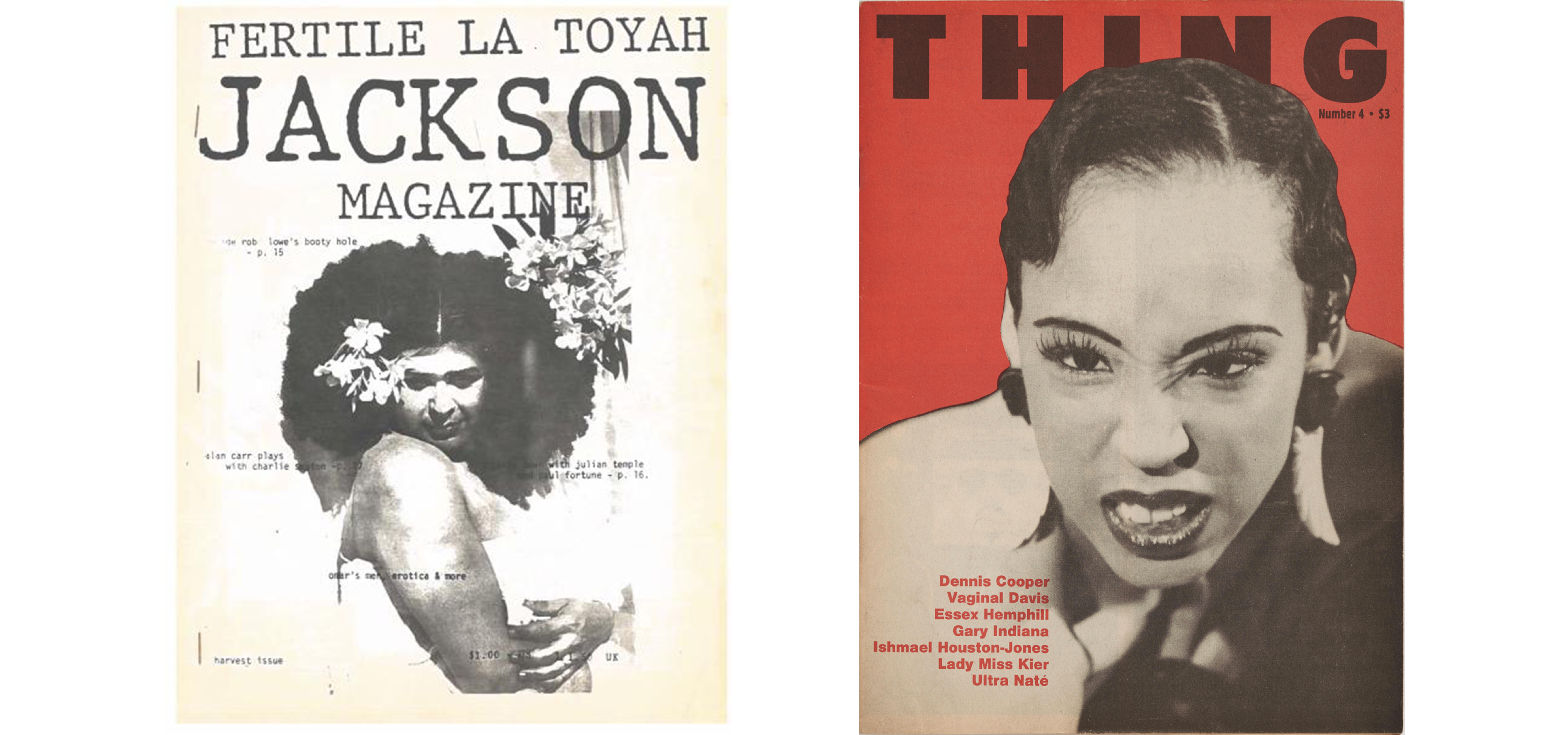
Thing (“She Knows Who She Is”) — 1989-1993
Thing documented Chicago’s Black queer nightlife scene from 1989-1993. Founded by Robert Ford, Trent Adkins and Lawrence Warren, the first of 10 issues came in November of 1989, a 20-page, photocopied half-letter zine that documented Chicago’s burgeoning house music scene and ballroom culture thriving in underground club spaces. Thing was comprised of interviews, poetry, fiction, reviews, and art highlighting Black queer history, and run out of Ford’s apartment. It covered Black hair-care tips, erotica, book recommendations, best/worst play-lists, a gossip column (“Bunny & Pussy”), and personal essays on homelessness, anti-gay violence, and AIDS. “Robert really took it on as a mission to make sure people were informed about AIDS and knew where to go, how to be safe and about people who were living with HIV,” Thing designer Simone Bouyer said. “And that was almost unheard of at the time.”
In The Life and Legacy of Thing, Solveig Nelson quotes Ford in an interview at SPEW, the first queer zine fest held in 1991 in Chicago at the Randolph Street Gallery: “We knew for ourselves what a rich and important cultural thing gay black men have and share. We wanted to make a magazine that would be a way of documenting our existence and contribution to society. Our idea was not so much [to] radicalize or subvert the idea of magazines as to make one from our own point of view. This was a necessary intervention because there was “so little of us in ‘mainstream media.’” Leor Galil details the history of Thing for the Chicago Reader in Thirty years ago, a Black queer zine captured the scene that birthed house.
For more reading on Black self-publishers in history, we also recommend Mariame’s newsletter, “Prisons, Prose, and Protest,” where she writes about David Ruggles, a 19th century abolitionist, and the proprietor of the very first Black-owned bookstore in the country: D. Ruggles Books. Independent bookstores and zine fairs continue to be a central rallying point for Black resistance and abolitionist allies. The Black Reading Room at Saturday’s BZF will be a powerful space.
As Neta and Mariame wrote in “The City in Our Hands,” “The reality of Black publishing is not simply a linear timeline or a beautiful spread of publications and presses. It is a complex, decentralized system, and a terrain of struggle where powerful resonances can be found. David Ruggles’s magazine warning of slave catchers’ tactics in the 19th century reverberates in a zine explaining how to report ICE raids today. Gwendolyn Brooks’s chapbook responding to the uprisings after the assassination of Martin Luther King, Jr. sits next to a zine about the assassination of a Stop Cop City protestor. To hold these publications together in one room is to feel and see history, and the city in which history is made, differently.”
I hope that some of you will be able to make it to the Black Zine Fair this weekend!
Eva, One Million Experiments Fellow
Thank you for reading the One Million Experiments Newsletter. If you like what you see, please consider sharing it with a friend.
Explore our catalog of projects, podcasts, and zines at millionexperiments.com and follow us on Instagram @millionexperiments.